Engineering Smart, Sustainable Structures for Australia’s Future - Our Technical Insight Series
As the Australian built environment evolves towards lower-carbon standards, Solid Engineering & Structural Design integrates sustainability and embodied carbon considerations directly into the core structural design process. We treat carbon performance as a fundamental design variable, alongside strength, serviceability, durability, constructability and commercial efficiency.
Our Integrated Design Approach
We partner with developers, architects, builders, and investors from early conceptual stages to:
Optimise Structural Systems: Evaluating framing, spans, grids, and foundation options to minimise material quantities and upfront carbon without inflating construction budgets.
Navigate Evolving Frameworks: Guiding design teams through the structural embodied carbon requirements of statutory frameworks (NCC, NABERS, Green Star, NSW SEPP) and green finance criteria mitigating compliance risks well before they impact project timelines.
Deliver Practical Engineering: Combining rigorous academic background with hands-on consultancy experience across residential, commercial, and industrial projects.
Our Technical Insight Series
The Australian construction industry is undergoing a structural transition driven by net-zero targets, evolving building codes, and shifting green finance requirements. Navigating this landscape requires more than just compliance, it demands a clear understanding of how emerging policy directly influences structural design, material selection, and project feasibility.
To support developers, architects, asset managers, and fellow engineers, we publish a dedicated Technical Insight Series. Designed to bridge the gap between high-level policy frameworks and practical design-office decisions, our technical papers deliver actionable engineering insights, regulatory breakdowns, and optimization strategies to help project stakeholders stay ahead of the regulatory curve and maximize asset value.
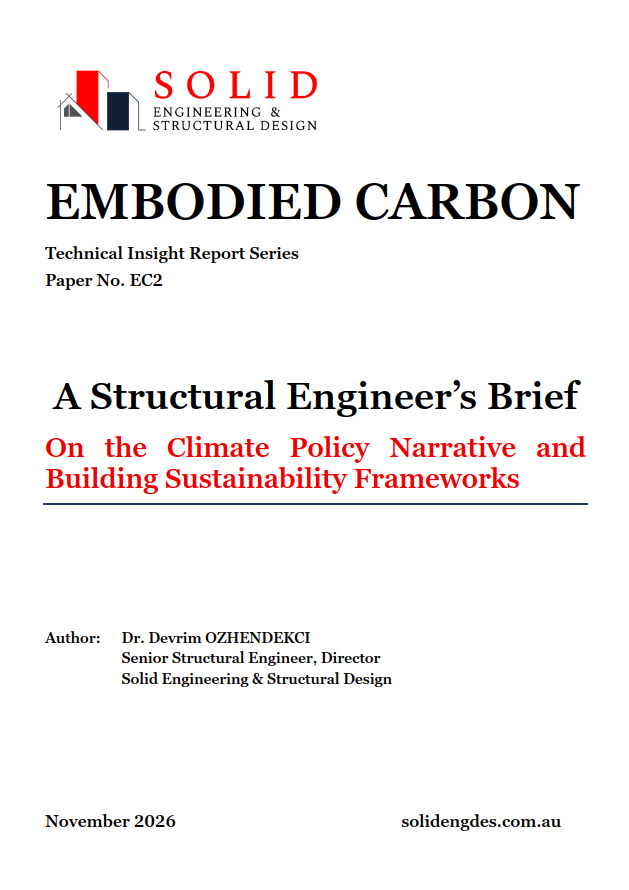
Paper No. EC1: The Regulatory Evolution of Embodied Carbon in Australia And What It Means for Structural Engineering
(01 October 2026)
Is embodied carbon still just a sustainability reporting topic, or has it become a fundamental structural design variable? Our first paper examines how Australia is moving from voluntary targets toward standardised measurement, statutory reporting, and potential future standards.
Key Highlights:
Regulatory Trajectory: A detailed breakdown of statutory reporting requirements (NSW SEPP, BASIX) and national directions (NCC 2025/2028, NABERS rating tools, National Material Emission Factors Database).
The Financial Signal: How green loans, sustainability-linked loans, and investor benchmarks are connecting carbon performance directly to borrowing costs and asset values.
International Precedents: What Australia can learn from mandatory embodied carbon frameworks in Europe, London, and California.
The Structural Engineer's Role: Practical strategies for structural optioneering, geometry optimisation, and early-stage design decisions where the greatest carbon reductions occur.
⬇ Read The Paper EC1 ⬇
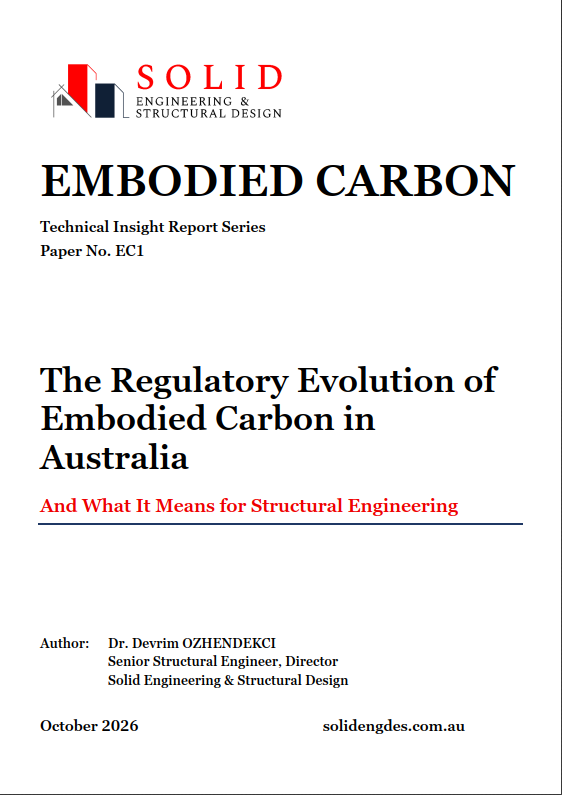
Paper No. EC2: A Structural Engineer’s Brief on the Climate Policy Narrative and Building Sustainability Frameworks
(01 November 2026)
How do global climate targets translate into day-to-day structural engineering decisions?
In the second paper of our Technical Insight Series, we examine the connection between macro-level climate policy and local engineering practice. Paper No. EC2 bridges high-level carbon accounting with on-the-board design by exploring:
Key Highlights:
The Climate Context: International temperature targets, carbon budgets, and Australia’s 2035 NDC commitments.
Accounting Standards: Translating corporate GHG Protocol Scopes (1–3) into granular Life Cycle Assessment (LCA) and Whole Life Carbon Assessment (WLCA).
Australian Frameworks: A structural perspective covering NatHERS, BASIX, Green Star and the integration of the NABERS Embodied Carbon Tool
⬇ Read The Paper EC2 ⬇